
I love the term "voracious reader." It sounds almost like you are a rabid animal that loves to read. In fact, sometimes I feel like that when I have an amazing book that I just can't put down! :)
This is a long post, but worth the read if you want to help your students to read more. There are a couple of freebies at the end of the post! :)
So many times, I get told by parents, "My child really doesn't like reading," or "My child loves to read, but doesn't read very much." They always want to know how they can get their child to read more, and I love that they are involved in this part of their child's life.
I think that there are several main reasons why kids (and adults) don't read very much:
-Too much TV, video games, phone time, etc. There are simply too many distractions for us all these days and it's easy to get sucked into doing meaningless things for extended periods of time if we are not conscious about it.
-Busy schedules and excuses. I get it. You're busy. You're student is busy. We're all so stinking busy! But take the time to think about how much time you spend on social media sites and ask your students to do the same (every 5 minutes here and there is nickle and diming you to death!), video games, computer time,taking breaks from homework to hang around your room, or how much time your're spending doing things that aren't really necessary. Books are easy to carry anywhere- read while waiting at the doctor's office, for practice to begin, etc. Steal minutes back from your day to read!
-Your student doesn't know him/herself as a reader and/or does not know how to find good books they'd really enjoy to read.
How to help your child or student choose a great book:
Talk with your student about
-what they like to think about, dream about, and play at recess and at home
-what they like to do; sports, instruments, drama, clubs, etc.
-what movies and TV shows they like to watch (are they funny, sad, action-packed, mystery, etc.).
From this information, even if you are not knowledgeable about children's literature, you should be able to do a Google search to find a book that your child will enjoy. Also, find other parents, teachers, or students who read A LOT. These people are going to be key in helping you to find the right book for this student.
Before you recommend a book to a student, make sure the book is on their approximate reading level. If you are not sure what their reading level is, try the 5 finger rule. (Have students read the first full page of the book. If they make 5 or more mistakes, the book is probably too difficult for them. After I do this test with them, I ask the student how he or she feels about the difficulty of the book. If they feel comfortable with it, I will usually let them try it. Use you best judgement.)
Many times, I will do a Goodreads search. Their lists are GREAT ways to find new books you might like. All I do is type in Google "books similar to (a book I really liked)" and usually a Goodreads book list will come up that will give you recommendations of other books similar to the book you liked.
Goal Setting
I've taught many different things in my nine years of teaching, but one thing has remained constant, if you don't have a goal, you have nothing to reach toward, and you will not achieve as much as you could have.
This is especially true in regards to reading. I'll be honest with you, before this year, I never set a goal for myself in reading. I always read a few books a year (maybe 5-10 books) and I felt ok with that. But when I realized that my students (whom I was giving class time to read) were only finishing about that many a year or less as well, I got really frustrated with the situation.
Then I realized that it was my fault. (I hate when that happens!) I read a book, The Book Whisperer by Donalyn Miller, and she talked about having a goal for your reading each year. In 6th grade, she suggests 40 books- I think any grades 3-8 can read 40 books in one year, but their level of text difficulty will vary throughout the grades.
Over the summer, I set a goal for myself to read 30 books, and I did! I was so proud of myself, and I read some really great books! Not only that, but every book I read made me even hungrier for new books. So I decided to try it with my gifted and talented students this year.
I made a book log (and a genre requirement), and had my students fill out books whenever they finished them. They choose ALL of the books they read. I've found this to be key in helping them to enjoy reading. We also briefly talk about the books we are currently reading each week, and I record what book they are currently on, so that I can also help keep them accountable.
I have students who hadn't finished a book in over a quarter, who've now read 4-5 books in the last two quarters, because I am helping to keep them accountable, and because they have a goal. Talk about your goals every couple of weeks. Tell your students where you are at with your goals. Ask them about theirs. These conversations will be invaluable to their reading lives.
If you want your child to read more during the year, try these strategies:
1. Set a goal with your child. Choose a number of books that they should read during the year. Allow your child to be a part of the process. Ask them how many books they think they can read during the year. (4th grade and up should be able to read 40 books during the school year. 3rd grade may be able to as well, but you may need to back that down to 25 or 30.)
This is a long post, but worth the read if you want to help your students to read more. There are a couple of freebies at the end of the post! :)
So many times, I get told by parents, "My child really doesn't like reading," or "My child loves to read, but doesn't read very much." They always want to know how they can get their child to read more, and I love that they are involved in this part of their child's life.
I think that there are several main reasons why kids (and adults) don't read very much:
-Too much TV, video games, phone time, etc. There are simply too many distractions for us all these days and it's easy to get sucked into doing meaningless things for extended periods of time if we are not conscious about it.
-Busy schedules and excuses. I get it. You're busy. You're student is busy. We're all so stinking busy! But take the time to think about how much time you spend on social media sites and ask your students to do the same (every 5 minutes here and there is nickle and diming you to death!), video games, computer time,taking breaks from homework to hang around your room, or how much time your're spending doing things that aren't really necessary. Books are easy to carry anywhere- read while waiting at the doctor's office, for practice to begin, etc. Steal minutes back from your day to read!
-Your student doesn't know him/herself as a reader and/or does not know how to find good books they'd really enjoy to read.
How to help your child or student choose a great book:
Talk with your student about
-what they like to think about, dream about, and play at recess and at home
-what they like to do; sports, instruments, drama, clubs, etc.
-what movies and TV shows they like to watch (are they funny, sad, action-packed, mystery, etc.).
From this information, even if you are not knowledgeable about children's literature, you should be able to do a Google search to find a book that your child will enjoy. Also, find other parents, teachers, or students who read A LOT. These people are going to be key in helping you to find the right book for this student.
Before you recommend a book to a student, make sure the book is on their approximate reading level. If you are not sure what their reading level is, try the 5 finger rule. (Have students read the first full page of the book. If they make 5 or more mistakes, the book is probably too difficult for them. After I do this test with them, I ask the student how he or she feels about the difficulty of the book. If they feel comfortable with it, I will usually let them try it. Use you best judgement.)
Many times, I will do a Goodreads search. Their lists are GREAT ways to find new books you might like. All I do is type in Google "books similar to (a book I really liked)" and usually a Goodreads book list will come up that will give you recommendations of other books similar to the book you liked.
Goal Setting
I've taught many different things in my nine years of teaching, but one thing has remained constant, if you don't have a goal, you have nothing to reach toward, and you will not achieve as much as you could have.
This is especially true in regards to reading. I'll be honest with you, before this year, I never set a goal for myself in reading. I always read a few books a year (maybe 5-10 books) and I felt ok with that. But when I realized that my students (whom I was giving class time to read) were only finishing about that many a year or less as well, I got really frustrated with the situation.
Then I realized that it was my fault. (I hate when that happens!) I read a book, The Book Whisperer by Donalyn Miller, and she talked about having a goal for your reading each year. In 6th grade, she suggests 40 books- I think any grades 3-8 can read 40 books in one year, but their level of text difficulty will vary throughout the grades.
Over the summer, I set a goal for myself to read 30 books, and I did! I was so proud of myself, and I read some really great books! Not only that, but every book I read made me even hungrier for new books. So I decided to try it with my gifted and talented students this year.
I made a book log (and a genre requirement), and had my students fill out books whenever they finished them. They choose ALL of the books they read. I've found this to be key in helping them to enjoy reading. We also briefly talk about the books we are currently reading each week, and I record what book they are currently on, so that I can also help keep them accountable.
I have students who hadn't finished a book in over a quarter, who've now read 4-5 books in the last two quarters, because I am helping to keep them accountable, and because they have a goal. Talk about your goals every couple of weeks. Tell your students where you are at with your goals. Ask them about theirs. These conversations will be invaluable to their reading lives.
If you want your child to read more during the year, try these strategies:
1. Set a goal with your child. Choose a number of books that they should read during the year. Allow your child to be a part of the process. Ask them how many books they think they can read during the year. (4th grade and up should be able to read 40 books during the school year. 3rd grade may be able to as well, but you may need to back that down to 25 or 30.)
2. Have your child keep track of the books they read throughout the year. Keep the list in a prominent place in your home. (ie: on the fridge, on a bulletin board, etc.)
3. Encourage your child to read different genres. Have a checklist- try to get them to read at least 2 books from each genre. This will help them understand different cultures, time periods, concepts, vocabulary, etc. This builds their background knowledge in huge ways.
4. Most importantly, you (the parent or teacher) need to read. Your students (or children) should see you reading and see that it is important to you as well. If you've never been much of a reader, admit that to your students. Tell them that you are taking this reading journey with them. Set a realistic but high goal for yourself. Keep track of the books you read and put your reading log in a prominent place, next to theirs.
One of the most important things in a child's reading life is for them to see that adults around them, parents, grandparents, teachers, etc. value reading. Talk about books with your students- this will go with them for the rest of their lives!
Happy reading,
Ashley :)
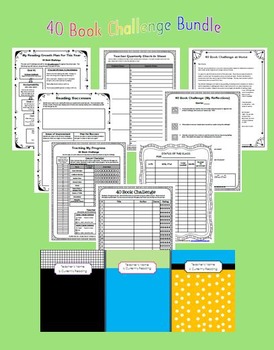
Want to try the 40 Book Challenge with your classroom or a small group of students? Check out my 40 Book Challenge Bundle below. It has everything you'll need to get started with the 40 Book Challenge! You can start this challenge at any time of the year. The first year I did the challenge with my students, we started in December, and we set our own goals.... the cool thing was, most of us read 40 books between December and June! There's no time like the present to start! :)


